By Jordan EllisReviewed by the DUI Lawyer Toronto defence teamUpdated 7 min read
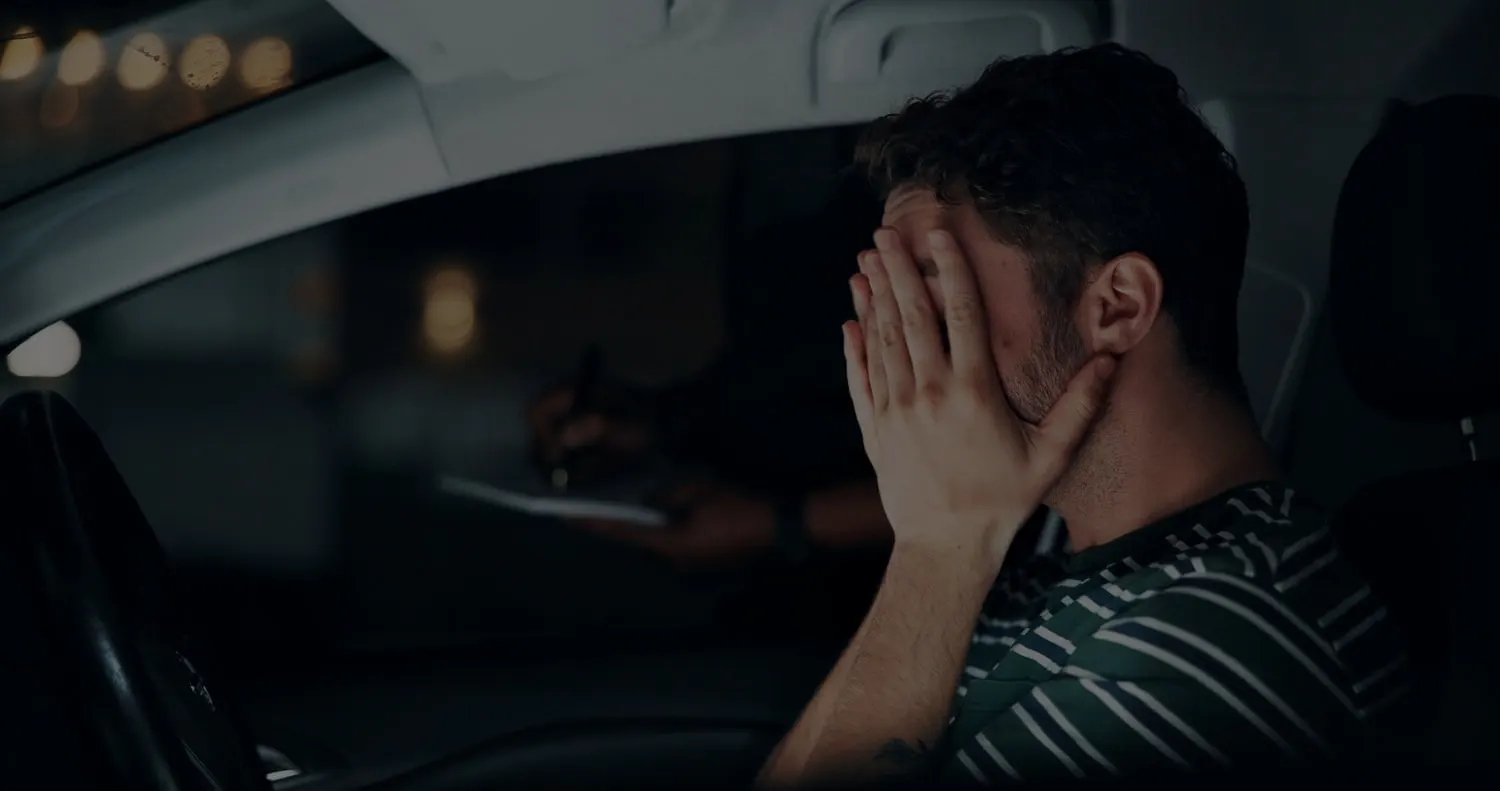
At a RIDE checkpoint in Ontario, police stop drivers, ask for your licence, vehicle permit and insurance, and can demand a roadside breath sample from anyone they have lawfully stopped, even with no suspicion that you have been drinking. Most RIDE stops last a minute or two and end with the driver being waved through. If the screening device registers a fail, or the officer believes you are impaired, the stop can quickly become an arrest and a trip to the station.
Below, we walk through each stage of a RIDE stop, what you are required to do, what you can politely decline, and how a routine check can turn into an over 80 charge.
What is a RIDE checkpoint?
RIDE stands for Reduce Impaired Driving Everywhere. It is a check stop program in which officers set up on a road and stop vehicles to look for drivers affected by alcohol or drugs. Across the GTA you may be stopped by the Toronto Police Service, Peel Regional Police, York Regional Police, Halton Regional Police Service or Durham Regional Police Service, while the OPP runs checks on and near the 400-series highways.
RIDE stops are common in the evenings and on weekends, and they become much more frequent during the holiday season. Police do not need a reason to stop you at a RIDE checkpoint, because the program exists for road safety.
What happens when you pull up to a RIDE stop?
A typical RIDE stop follows a predictable pattern:
- You are directed to stop. An officer waves you into a lane or signals you to pull over. At night, many officers shine a flashlight into the vehicle.
- You produce documents. You will be asked for your driver's licence, vehicle permit (ownership) and proof of insurance. You are required to produce these.
- The officer asks questions. Common ones are "Where are you coming from?", "Have you had anything to drink tonight?" and "When was your last drink?"
- The officer observes you. While you talk, the officer is watching for the smell of alcohol, your speech, your eyes and how you handle your documents.
- You may be asked for a breath sample. Under mandatory alcohol screening, the officer can demand a sample into an approved screening device.
- The result decides what happens next. You are either sent on your way, given a roadside suspension, or arrested.
Do you have to answer questions at a RIDE checkpoint?
You must identify yourself and produce your documents, but you are generally not required to answer questions about where you have been or whether you have been drinking. You can say, calmly and politely, that you would prefer not to answer questions.
This matters because casual answers often become evidence. A remark like "just two beers with dinner" is frequently the first thing written in an officer's notes, and it can be used to justify further testing. At the same time, never lie to police. A false answer can create problems of its own. And remember: the questions are optional, but a lawful breath demand is not.
Mandatory alcohol screening: can police test you without suspicion?
Yes. Since 18 December 2018, section 320.27(2) of the Criminal Code has allowed an officer who has an approved screening device to demand a roadside breath sample from any driver who is lawfully stopped. The officer does not need to smell alcohol, see an open container or hear an admission.
Refusing or failing to provide a sample without a reasonable excuse is a separate criminal offence under section 320.15. A first conviction for refusal carries a mandatory minimum fine of $2,000, which is higher than the minimum for many over 80 cases. Our article on whether you can refuse a breathalyzer in Ontario explains why refusing rarely helps, and our breath test refusal defence page covers how those charges are fought.
Police may also screen for drugs. An officer who suspects drug use can demand an oral fluid sample at the roadside, or a drug recognition evaluation at the station. Those cases are covered on our drug-impaired driving page.
Pass, warn or fail: what the roadside result means
The approved screening device does not give a precise reading. It shows a pass, a warn or a fail.
| Result | What it suggests | What usually happens |
|---|---|---|
| Pass | Below 50 mg of alcohol per 100 mL of blood | You are usually free to go, unless you are a zero-tolerance driver |
| Warn | 50 to 79 mg | Provincial roadside suspension of 3, 7 or 30 days depending on your history within five years; not a criminal offence |
| Fail | 80 mg or more | Arrest, a demand for breath samples at the station, and possible criminal charges |
Zero tolerance applies to novice drivers (G1, G2, M1 and M2), drivers aged 21 and under, and commercial drivers. For them, any alcohol at all can lead to a roadside suspension, even with a pass on the device.
What triggers an arrest at a RIDE stop?
A RIDE stop usually turns into an arrest for one of these reasons:
- A fail on the screening device. This generally gives the officer reasonable grounds to demand breath samples into an approved instrument at the station under section 320.28.
- A refusal or failure to blow. Not providing a suitable sample can lead to a refusal charge on the spot.
- Observed signs of impairment. Slurred speech, unsteadiness or poor driving before the stop can support an arrest for impaired driving, with or without a breath reading.
- Signs of drug use. These can lead to an oral fluid demand or a drug recognition evaluation.
If the station readings are over 80, or you refuse, Ontario also imposes a 90-day Administrative Driver's Licence Suspension and a 7-day vehicle impoundment. These start immediately and run separately from the criminal case. Our guide to the 90-day ADLS explains how that suspension works.
Your right to a lawyer at the station
Once you are arrested, section 10(b) of the Charter gives you the right to retain and instruct counsel without delay, and police must tell you about that right. At the station, before the breath tests on the Intoxilyzer 8000C, you should be given a reasonable opportunity to speak privately with a lawyer of your choice or with free duty counsel.
Say clearly that you want to speak to a lawyer. When police fail to respect this right, the breath results may be excluded from evidence under section 24(2) of the Charter. Our case results include matters where rights issues made the difference.
What to do and what not to do at a RIDE checkpoint
Do:
- Pull over where directed, turn on your interior light at night and keep your hands visible.
- Have your licence, vehicle permit and insurance within easy reach.
- Stay calm, polite and brief.
- Comply with a lawful breath demand and follow the instructions for giving a sample.
- If you are arrested, ask to speak to a lawyer and then stop talking about your evening.
- As soon as you can, write down the time, the location, what was said and how long each step took.
Do not:
- Make an illegal turn or drive erratically to avoid the checkpoint. That gives police a reason to stop you anyway.
- Argue with the officer, lie or volunteer how much you drank.
- Refuse a breath demand, or pretend to blow.
- Have "off the record" conversations with officers at the station. Nothing is off the record.
What happens after a RIDE stop leads to charges
A charge after a RIDE stop sets two processes in motion. The provincial side, including the 90-day suspension and impoundment, begins right away. The criminal case proceeds in the Ontario Court of Justice, where the Crown must prove the charge and the defence receives disclosure such as instrument records, maintenance logs, officer notes and any video.
Many of these cases turn on how the stop was handled: whether the demand was lawful, whether the sample was taken properly, and whether your right to counsel was respected. Whether you were stopped at a holiday check in Mississauga, on a York Region road near Vaughan or anywhere in Toronto, the same Criminal Code rules apply. Our step-by-step guide on what to do after being charged with a DUI covers your first few days.
Talk to a DUI lawyer after a RIDE stop
If a check stop ended with a suspension, a breath test at the station or a court date, an early review of the evidence can shape every decision that follows. Our Toronto DUI defence team offers a free, confidential consultation and can explain your options in plain language.
Common questions
Can police stop me at a RIDE checkpoint without a reason?
Yes. RIDE check stops are a lawful road safety program, so police do not need to suspect you of anything to pull you over. Once you are lawfully stopped, an officer with an approved screening device can also demand a roadside breath sample under the Criminal Code's mandatory alcohol screening provision, even if there is no smell of alcohol and no sign of impairment.
Do I have to answer questions about drinking at a RIDE stop?
You must identify yourself and produce your licence, vehicle permit and proof of insurance. Beyond that, you are generally not required to answer questions about where you have been or whether you have been drinking, and you can politely say you would prefer not to answer. Declining questions is different from refusing a breath demand, which is a criminal offence.
What happens if I blow a warn at a RIDE checkpoint?
A warn result suggests a blood alcohol concentration between 50 and 79 mg per 100 mL of blood. It is not a criminal offence, but Ontario imposes a roadside licence suspension of 3 days for a first occurrence, 7 days for a second and 30 days for a third or more within five years, along with escalating program requirements.
Is a fail on the roadside device enough to convict me of over 80?
Usually not on its own. A roadside fail generally gives the officer grounds to arrest you and demand breath samples into an approved instrument at the station. An over 80 charge is normally built on those station readings, and the stop, the demands, the instrument records and the officer's notes can all be reviewed and challenged by your defence lawyer.
When can I speak to a lawyer after a RIDE stop?
Once you are arrested, police must tell you about your right to counsel without delay under section 10(b) of the Charter. Before the breath tests at the station, you should be given a reasonable opportunity to speak privately with a lawyer of your choice or with duty counsel. Tell the officer clearly that you want to speak to a lawyer.